How to sell your old books: where, how and at what price

Dear bibliophiles, good day.

By Olympe Marcelet, inspector of platforms, emphatic keywords and the priced miracles of the bibliophilic digital market.

I am often asked where to sell an old book. The real question is how to sell it without being politely fleeced, because between the hurried bookseller, the greedy auction house and the platform promising wonders, there are a thousand ways to part with a good book for half what it is worth.

It all starts with an obvious point we neglect: one sells well only what one has identified. Before thinking of price, note the edition, the format, the real condition, the binding and any interest of provenance, because the same title may be worth ten euros or ten thousand depending on printing and condition. As long as you do not know what you are holding, you are not in a position to sell, but in a position to have your own book explained to you by the person who wants to buy it; at the slightest doubt, first work out its value.

That leaves the channels, which one must know in order to choose. The specialist bookseller is the simplest and the safest: he buys, you are paid at once, but since he resells he buys low, often at half the retail price or less. The auction offers the finest potential, since a good book can soar there, at the price of fees taken from the seller as from the buyer, of delays and of a share of chance; it is reserved for pieces that deserve a sale room. eBay gives the widest audience, ideal for middling values, but competition is fierce and everything rests on the quality of the listing. Catawiki, an online auction house based in the Netherlands, aims higher, with an international clientele, and also charges both sides. For ordinary stock, Delcampe (a Belgian marketplace for collectors), AbeBooks, local classified-ad sites and private sales avoid the intermediary, provided you accept a more or less informed public. Finally, groups and forums of bibliophiles often allow one to sell better and faster, to people who know exactly what they are buying.

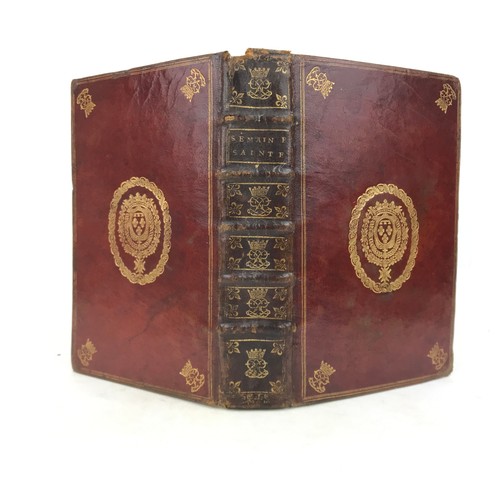
Whatever the channel, an honest listing sells better than a flattering one. Give the exact title, author, publisher, date, format, and above all the true condition, because a hidden water stain does more harm than an admitted one. State whether the copy is complete with its plates and maps, the first question of any serious buyer, and really photograph the book: cover, spine, title page, defects. A fine binding deserves a mention: the informed amateur recognises it and pays for it.

Then comes the price, where one goes wrong most. The classic trap is to rely on asking prices, which prove nothing since everyone asks what he likes; only realised prices count, meaning what actually sold, in the room or online. Then set an amount that leaves room for negotiation, without confusing hope and reality, because a book is never rare until someone has paid for it.

Beware, finally, of fees piling up on both sides, of over-kind estimates that flatter in order to capture your lot, and of your own tendency to overrate what you love. The market does not pay for your attachment: it pays for an object, a condition, a demand. Keep a cool head, and the smile of someone who knows exactly what he is selling.

To go further, see our pages on valuing an old book, first editions and formats.

GUILDE · inspection of platforms — O. Marcelet. Service note for prudent sellers.

Document classified: restricted circulation.

La lettre du bibliophile

Si cette chronique vous a plu : recevez trois nouvelles par semaine — livres rares, reliures, enchères, et les Dossiers IGLI. 18 ans d'archives, quelques milliers de lecteurs.

Pas de pub, pas de revente de données. Désabonnement en un clic.

À lire ensuite

The Sacrificed Books of The Ninth Gate: Inquiry into Polanski’s Cursed Book

Dear bibliophiles, good day.

By an adept, in the manner of Lucas Corso, surveyor of the bibliophilic margins.

Some years ago I was told about a man in Toulon who owned Latin leaves of the seventeenth century whose provenance was murky. Not murky in the way ordinary bibliophiles mean it: no dubious trimming of the margins, no ill-judged restoration. Murky because these leaves, he said, came from a book that had been taken apart on purpose to make another book, one that had never existed. I noted the name, filed the information under things to check, and then forgot it. Until the other evening, when I watched Roman Polanski’s The Ninth Gate again.

The film, released in 1999, adapts Arturo Pérez-Reverte’s El Club Dumas. It tells of the quest of a rare-book broker, a trade I know well, commissioned to authenticate one of the three known copies of a book called De Umbrarum Regni Novem Portis, On the Nine Gates of the Kingdom of Shadows, supposedly printed in Venice in 1666 by one Aristide Torchia, and said to have been co-signed by the Devil himself. Torchia, burned by the Inquisition, was supposed to have left three copies identical except for nine engravings which, compared with one another, would yield the keys to invoking Lucifer. The book does not exist, of course. Pérez-Reverte invented it for his novel. Polanski had it manufactured for his film. And this is where the bibliophilic story starts to get interesting.

Three false books, two real ones sacrificed. The production designer of The Ninth Gate is Dean Tavoularis, the man behind The Godfather, Apocalypse Now and Bonnie & Clyde. Oscar, 1975. A man of that stature has a team of prop makers, and the film’s head prop master is called Gilbert Pieri. Pieri had to make three hero copies of the Ninth Gate: the Balkan, the Fargas and the Kessler. Three distinct bindings, nine engravings per volume and, a decisive detail, a Latin text inside that had to look real under the camera, in close-up, open on Johnny Depp’s knees.

Pieri did not print that text. He did what any bibliophile will recognise as heresy: he bought two authentic old Latin books, one of more than five hundred pages, the other of more than eight hundred, and he took them apart. Some twenty leaves from the two volumes were combined, reinserted into the custom-made bindings, and duplicated to serve the three copies needed for the film. The detail is known to specialist collectors, who tell it to one another on forums devoted to film props. Some claim to own original pages from these two books, torn out during production and given to members of the crew. One of them eventually identified the source book by typing a Latin phrase from the film into Google: it was a Latin theological and Catholic work of 1588, from which the production had merely removed a few words to give the illusion of a coded text.

Some twenty leaves of a book of 1588, dismembered to appear in a Polanski film: this should make any lover of old paper tremble. Two real books were immolated on the pretext of making a third, rarer still, since it does not exist.

Then there are the nine engravings. They are, in Pérez-Reverte’s novel as in the film, the central element: each copy contains nine, but three of them differ from one volume to the next, and comparing the eighteen images reveals the secret. These engravings, too, have a bibliophilic history worth attention.

Here is a rare particularity: the engravings already existed in Pérez-Reverte’s novel, where they bear the initials AT and LCF; those in the film take up their formal language. The formal language of these engravings, as everyone knows, draws ostensibly on the Hypnerotomachia Poliphili, the allegorical romance printed by Aldus Manutius in Venice in 1499 and attributed to Francesco Colonna. It is, as everyone knows, one of the most prestigious incunabula ever printed, famous for its one hundred and seventy-two anonymous woodcuts, themselves the object of five centuries of speculation about their author. A copy can be consulted online on Gallica, the digital library of the Bibliothèque nationale de France (bpt6k587910); those who want to see what a perfect copy costs today will remember that a Poliphilo in a fine binding has passed four hundred thousand euros at public sale, and that Jean Grolier alone owned five copies.

To make his cursed book, then, Pérez-Reverte had the formal language of the rarest and most mysterious book of Western printing adapted. It is a choice of great elegance: a seventeenth-century fake imitating a real book of the late fifteenth. The film’s engravings were drawn, engraved and printed like real copperplate prints, nine for each copy, twenty-seven prints in all, not counting the variants that Polanski had redrawn. Those prints exist somewhere, framed at Polanski’s or at Pieri’s, or scattered among the members of the crew.

As for official sales, the record is poorer than for The Name of the Rose. Neither Christie’s, nor Sotheby’s, nor Bonhams, nor Heritage, nor Propstore has seen a hero copy of the Ninth Gate go through. The three bindings made by Pieri are, to my knowledge, still in private collections; one belongs to the collection of a certain “balkan.press”, a discreet figure who runs a specialist website devoted to the object.

But the parallel market is teeming. More than forty official replicas of the book are listed online, sold for between five hundred and twelve hundred dollars depending on quality. A whole tinkerer’s literature circulates, with manufacturing tutorials, reconstructed typefaces, tracings of the nine engravings and of the tenth (the one called the “true ninth gate”, inscribed LCF). The Ninth Gate is probably the most copied prop book in the history of cinema.

And then there are the leaves. Those from the two sacrificed books. They circulate quietly, sometimes on eBay, more often in private transactions between collectors. The bibliophilic status of these objects is staggering: they are at once fragments of real old books (the Latin theological work of 1588), film props deposited by the production, and relics of the shoot co-signed Polanski. Three provenances for a single leaf: for the collector, an object to the third degree.

I do not know whether the man from Toulon really has Latin leaves that passed through the shooting of The Ninth Gate. I did not bother to go and see. But the idea that real old books were destroyed (consumed is the right word) to make a fictional book whose market value reaches several hundred euros today in replica, and incalculably more as a hero copy, should give us pause.

Polanski and his team inverted the bibliophilic equation. Where the usual market pays for the old manuscript and despises the modern copy, their film does the opposite: it buys and destroys a theological book of 1588 to make a modern fake that resells for more than the pages it is woven from. The cursed book has done its work. The real work has dissolved into the matter of the fake. And the leaves now in circulation are, as in the film, fragments that must be compared with one another to guess where they come from.

Burned books vanish, but those that are shut away always end up coming back.

Guild shelfmark: GBO-C/2 — Le Livre Démembré [The Dismembered Book]

Document classified: restricted circulation — Bureau of Litigious Props.

Be the first to comment

Leave a Reply

Your email address will not be published.