Special Zoobibliological Surveillance Service — General Inspectorate of the Printed Book (IGLI)
Dear bibliophiles, good day.
By Doctor Fulbert de Cuirac, sworn veterinarian of printed entities, expert to the Bureau of Abnormal Manifestations of the Book, seconded for disorders of proprietary adhesion and heraldico-bibliological rejection phenomena, assisted in the keeping of the register by Miss Berthe Lépine, archivist of unavowable cases.
Preamble: why the IGLI, for the first time, turns its stethoscope. Since its foundation the IGLI had auscultated only the book. We recorded the fevers of the copy, the reddening of the page, the rejections of the ex-libris, the À rebours astray by a century. The patient, always, was made of paper; the observer, always, of flesh.
Now it has come to us (and the Bureau of Abnormal Manifestations has deliberated on it gravely) that a second entity deserved surveillance: the one who holds the book. The bibliophile himself. For if the book has its pathologies, its owner has more secret ones still, and less treated. We group these pathologies under a single nosological entity, the unspeakable (l’indicible), designated in IGLI nomenclature by the term bibliophilic taciturnity (taciturnitas bibliophilica): the whole of the behaviours that every amateur practises, that no amateur avows, and whose collective silence makes it, to this day, the best-shared and worst-documented disease of our discipline.
The IGLI therefore opens its first register of zoobibliology applied to the human subject. The present file sets out its protocol, describes the inaugural case, and issues, at the foot of the article, a call for witnesses from which we expect much.
Study protocol. Working definition. Held to be unspeakable is any bibliophilic act that the subject performs regularly, that he knows to be widespread, and that he would nonetheless conceal from his spouse, his bookseller, his confessor and, cardinal symptom, from himself.
The unspeakable is distinguished from simple mania in that it is accompanied by shame; and from vice in that it is harmless to others. It is a benign affection as to the body, severe as to self-esteem.
Method. Collection of voluntary confessions, anonymised, classified by syndrome. The subject is not judged; he is recorded. The IGLI recalls that no testimony will be passed on to heirs, auctioneers or insurers.
Inaugural case: founding subject of the register, Mr. Hugues O. So as not to ask of others what he would refuse to deliver himself, the founder of the present register has made himself its first subject. Initials kept at his express request: H. O. Anamnesis established by self-declaration, cross-checked by examination of his shelves.
Observation no. 1: tropism for the nineteenth-century binding. The subject confesses a marked, exclusive, almost tender preference for nineteenth-century morocco. Where the doctrine of good taste commands reverence for the great bindings of the classical centuries, subject H. O. avows that he prefers the nineteenth-century morocco, of an age that purists judge decadent.
Diagnosis. An aesthetic tropism, assumed but socially costly. The subject knows his preference to be a minority one; he maintains it; he blushes slightly at it when speaking aloud, and proudly in silence. A chronic affection, without gravity, contagious by frequenting the stalls.
Observation no. 2: monomaniacal polyexemplarity (Bovary form). The subject declares that he holds several first editions of the same title, namely Madame Bovary (Michel Lévy frères, two volumes, 1857). Not one, which would be a collection; not two, which would be prudence; but several, which falls (the IGLI notes it without condemning it) under monomaniacal polyexemplarity, the characteristic Bovary form.
Mechanism observed. Each copy is justified separately: this one for its binding, that one for its freshness, this third because it was there and one does not leave Bovary to somebody else. The subject cannot add up his justifications without blushing, nor subtract them without suffering. Typical symptom: he knows the exact number of his copies and will not say it.
Diagnosis. Affective accumulation disguised as bibliographic rigour. Prognosis guarded: the Bovary form readily extends to a second title, then a third.
Observation no. 3: growing acquisitive inhibition. The most recent symptom, and the most painful. The subject, formerly a resolute buyer, declares that he finds it harder and harder to buy. The basket fills and is not validated. The bid is prepared and is not placed. The hand rises over the catalogue and falls back.
Discussion. The IGLI distinguishes here three aetiologies, often intertwined. The first, pecuniary: the shelves are full, the purse less so. The second, subtler, which we name melancholy satiety of the advanced collector: by dint of choosing well, the subject no longer finds anything that surpasses what he owns, and purchase, once a feast, becomes arbitration, then renunciation. The third, finally, exogenous, which we class under the heading of circumstantial disaffection (taedium mercatus): here it is not the subject who falters, but the milieu that drives him away. Disgust at the experts’ estimates, ever more confident and seldom more accurate, turns the eye from the catalogue at the precise moment when the hand should be raised; the swelling of buyer’s fees adds to each hammer price a second, dissuasive hammer price; time is lacking to push open the doors of booksellers; salons and fairs weary; and the practice, little by little, goes digital, until the amateur buys only on screen, and so less and less. A collective aetiology disguised as an individual symptom: the subject believes himself cured of desire when he is merely discouraged by circumstances. A paradoxical form in every case, where the illness cures itself of its own symptom, and the subject complains of it, which proves he is not cured.
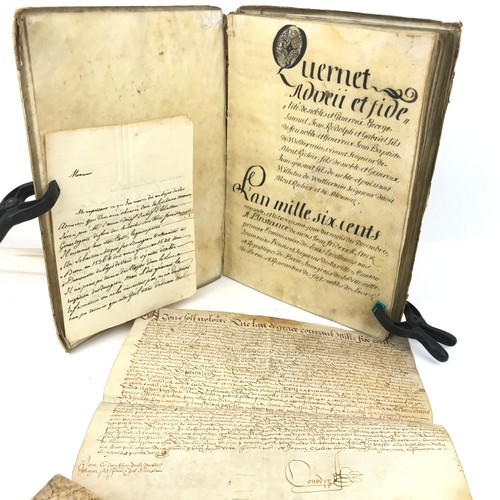
Plate of the IGLI: Map of the seats of the unspeakable (taciturnitas bibliophilica). Period engraving, nomenclature reassigned. Classmark IGLI/SSSZ/IND/01.
Ancillary observations (declared at the end of the interview, in a lower voice). The subject conceded, under the seal of the register: that he sometimes sniffs the spine of a volume before opening it; that he has bought books he has not read and has no intention of reading; and that he once, perhaps twice, rounded down the price of an acquisition when asked at home. The IGLI records without comment. These three facts constitute, by themselves, the universal foundation of the unspeakable.
Outline of a nosography. From this first case the IGLI draws a provisional grid of the syndromes of the unspeakable, to be completed by testimonies.
Polyexemplarity syndrome: holding the same title in several states, and keeping the count quiet.
Acquisitive inhibition: wanting, being able, and not concluding.
Shameful tropism: openly loving what good taste barely tolerates.
Bibliophilic olfaction: smelling before reading.
Unread acquisition: owning the text, ignoring its content.
Conjugal price minoration: the delicate art of rounding down.
Call for witnesses. The IGLI solicits the cooperation of the community. Every subject is invited to declare himself, anonymously, by answering in a comment, or by discreet channel (a sealed note slipped between two shelves, a confidence whispered to a sworn bookseller, or that email written at midnight which is sent only at the third attempt), the questionnaire below. One rule only: lie only by half, which is already a great deal.
1. How many copies of the same title do you own, and to how many would you admit in public?
2. When did you last give up a purchase you desired, and why did you forgive yourself?
3. Do you smell your books? At what precise moment?
4. Which volume in your library have you never read, and would you defend it tooth and nail?
5. Have you ever rounded down? (This question will not be kept. That is false, but it will put you at ease.)
6. What symptom, mania or small unavowable rite has the IGLI omitted from this grid? Describe it without shame: you may be the inaugural case of a syndrome that has no name yet, and that could bear yours.
The answers will feed the second file, in which the IGLI hopes to establish that the unspeakable is not an individual fault, but the normal, and secretly happy, state of the bibliophile species.
Provisional diagnosis and recommendation. Subject H. O. suffers from no grave affection. He suffers, like all of us, from bibliophilia at the stage where it ceases to be spoken. The IGLI prescribes neither withdrawal nor cure: shame is here the only side effect, and sharing the only remedy. Let everyone confess, and nobody will blush alone any more.
Final recommendation: go on buying with measure, smelling with discretion, and counting one’s Bovarys in a low voice.
Document classified: restricted circulation — Guilde IGLI. Reproduction inadvisable on gummed paper without necessity.
Filing classmark: IGLI/SSSZ/IND/01 — The unspeakable, inaugural case and call for witnesses.
By Doctor Fulbert de Cuirac, sworn veterinarian of printed entities, for the Guilde des Bibliopolicés; register kept by Miss Berthe Lépine.
Si cette chronique vous a plu : recevez trois nouvelles par semaine — livres rares, reliures, enchères, et les Dossiers IGLI. 18 ans d'archives, quelques milliers de lecteurs.
Pas de pub, pas de revente de données. Désabonnement en un clic.
A Bibliophile on the Titanic, or the Fate of Harry Elkins Widener



Leave a Reply