Dear bibliophiles, good day.
By Olympe Marcelet, inspector of platforms, emphatic keywords and the priced miracles of the bibliophilic digital market.
As a rule I inspect screens: the listings on eBay, Catawiki and Drouot Live, and the gap, sometimes startling, between what an advertisement promises and what a book really is. But there is one line in those listings whose origin almost nobody asks about: provenance. To understand why the market demands it today with such insistence, one has to leave the screens and go down to the source: to the years 1939-1950, the darkest territory in the history of the book, its black market. Allow me to follow one volume.
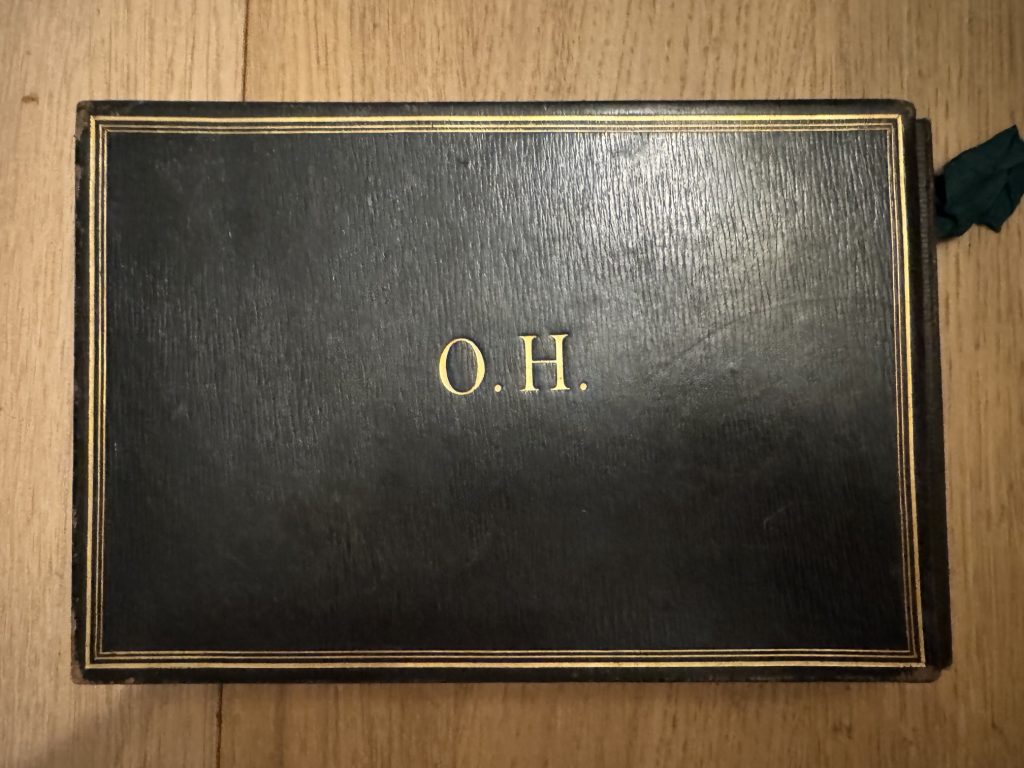
This morning, on a bookseller’s table, lies a quarto that nobody is asking for. Tired binding, first flyleaf marked with a pale trace: a torn-out bookplate. The dealer bought it in good faith; he will resell it in the same spirit. And yet this book has travelled more than any of us: night trains, customs cellars, nameless suitcases. Its story is not unique; it is that of thousands of others.
Before the war our volume slept in a private library in Paris. Not an institution, not a famous great collection: the library of an amateur, one of those quiet men who spent their Sundays comparing editions and noted in pencil, on the flyleaf, the date and price of each purchase. A library that bore a family name, and it is precisely that name that people would soon work to erase.
The disorder came first from our own side. From September 1939, France moved its books in haste: Versailles sent part of its holdings to Autun, Strasbourg evacuated to Aubusson, Lille and Dunkirk piled their crates into improvised depots. Convoys were poorly guarded: the archives of the Instruction publique [the French ministry of public education] report the disappearance of entire crates in the marshalling yards of Dijon, Nevers and Tours. Even before the occupier, chaos was manufacturing trade, and old books were already circulating without control.
Then came the Germans, and with them method. The Einsatzstab Reichsleiter Rosenberg (the ERR, after Alfred Rosenberg) combed Paris. At the Dienststelle Westen, Kurt von Behr organised; Gerhard Utikal directed, and Hermann Bunjes acted as the interface for books and archives. The seizures were methodical, and counted: the Turgenev Russian library left in the autumn of 1940, a hundred thousand or so volumes in over three hundred crates, of which only a tenth would remain; the Rothschild libraries alone yielded four hundred and fifty-eight crates of books in the weeks of August and September 1940 alone. To these were added the great Masonic collections of the Grande Loge and the Grand Orient, the library of the Alliance israélite universelle, the archives of the Fischl bookshop, and countless private collections confiscated from individuals, ours among them. The remarkable pieces took the train for Frankfurt, to the institute that Rosenberg dreamed of founding. Our volume was part of the journey, at least in theory.
But not everything took the road to Frankfurt, or the one to Switzerland. A share was sold in the open, in Paris itself, in the most respectable of institutions: the Hôtel Drouot, the main Paris auction house. The salerooms had reopened in September 1940; from 17 July 1941 a sign forbade Jews to enter, while inside the hammer fell on the goods of those whom the sign banned. The figures are staggering: between 1941 and 1942, close to a million spoliated objects passed through Drouot; in 1942 alone, there were about five hundred sales of “Jewish property”, nearly 8% of the house’s activity, before the pace fell by half in 1943 and then to thirty-five sales in 1944.
For these sales had men’s names. Some fifty auctioneers took turns there (Étienne Ader, Henri Baudoin, Robert Bignon, Roger Glandaz), assisted by experts who were most often dealers. Alphonse Bellier alone declared six sales of “Jewish property” out of some twenty for the single year 1942, seconded by the expert André Schoeller or by Jules Mathay, who on 13 May 1942 orchestrated one of these liquidations in the saleroom itself.
Books were no exception. In October 1942 the accessions register of the Bibliothèque nationale (the national library) recorded nearly four hundred works whose origin came down to three words: “saisis Hôtel Drouot” [seized, Hôtel Drouot]. Titles in Hebrew and in Cyrillic characters, pamphlets on the Bund and on Birobidzhan, travel guides to capitals, even children’s picture books: an entire library, made anonymous with one stamp, and poured without ceremony into a public collection. Our volume might have ended like that: knocked down for a few francs to a passing amateur. For the market in stolen books did not always need the dark; sometimes a well-lit room, an auctioneer and a catalogue were enough.
For those who preferred the dark, everything was played out between the round-up and the wagon. There lay the intermediate crates, and little was needed: an underpaid porter, an inquisitive non-commissioned officer, a badly closed crate in a badly kept warehouse. Our book then leaves official history, that of inventories and reports, and slides into the other kind, the parallel economy, with no register, where a rare volume is suddenly worth enough to live on for a few months.
So it takes the road. The most frequented runs south: Paris, Lyon, Annemasse, and the Swiss border a stone’s throw away, on the Geneva side. Other lots, those the ERR had entered as “lost”, slip through Dijon and then Bregenz, and from there to St. Gallen and Zurich; after 1943, the seized Italian private libraries would come down through Turin and Lugano. At the border posts the Swiss customs officers sometimes opened crates in which incunabula, Hebrew manuscripts, mystical works and correspondence slept pell-mell, and some still bore, stencilled, the name of the library they had been taken from.
At each stage, men. In Paris, dealers very active under the Occupation: the American OSS reports link the names of Martin Fabiani and Raphaël Gérard to private libraries and archives “of Jewish origin” resold in Switzerland. On the other side of the border the brokers waited: August Laube in Zurich, a dealer in autographs, acquired political correspondence coming from France; the orbit of Theodor Fischer in Lucerne, already known for sales of spoliated works of art, saw printed books and manuscripts pass through. Walter Andreas Hofer himself, the man from Göring’s art office, bought books. None of these names is a rumour: they appear in the reports of the ALIU [the Allied Art Looting Investigation Unit] and the OSS, and in the historiography that took decades to reconstruct the network.
What remained, in order to sell, was to erase the memory of the book. The bookplate was torn out (hence the pale trace on our flyleaf), the stamp rubbed away, a new origin invented. Between 1946 and 1949, Swiss sales were full of Hebrew incunabula “without provenance”, of runs of French correspondence, of Masonic works with mutilated bookplates, of manuscripts vaguely described as “from Central Europe”. In Munich, in Stuttgart, in Hamburg, dealers disposed of spoliated holdings under reconstructed provenances: “anonymous estate”, “vanished private library”, “southern German provenance”. American institutions then bought in good faith. The great bookseller Hans Peter Kraus, himself a refugee from Vienna, would admit in his memoirs to having acquired in Switzerland, between 1946 and 1950, books “whose exact provenance remained confused”.
When peace came, people wanted to give back. From 1947 to 1952 the Jewish Cultural Reconstruction worked to redistribute volumes that had no owner: it recovered incunabula, Talmudic works, Yiddish manuscripts, and found, powerless, that thousands of others had dissolved into the black market. Our book did not come home. It was already sleeping on a foreign shelf, under a false name, waiting for the table where it would one day reappear.
From this wound a discipline was born. Before 1940, provenance was merely a scholar’s pleasantry, an optional line in the catalogue. After 1950 it became a suspicion, then a requirement: any rare book without an origin is suspect. It is exactly there that the reflex I inspect today on the platforms was born, that “provenance” line which good listings display and bad ones slip away. When an advertisement stays silent on the origin of a fine copy, it is not always carelessness: it is sometimes the very long shadow of the wagons of 1942.
That is why, when a volume without provenance reappears, on a bookseller’s table or in the column of a platform, I do not see only a book. I see an extinguished library, a scattered family, a name that was scratched out. The black market did not only scatter volumes: it scattered memories, addresses, names. And it is up to us, bibliophiles, to recognise their trace when it rises to the surface, and to have the courage to name it.
By Olympe Marcelet, inspector of platforms, for the Guild of Bibliopolicés.
Going further: Martine Poulain, Livres pillés, lectures surveillées. Les bibliothèques françaises sous l’Occupation, Paris, Gallimard, 2008; Emmanuelle Polack, Le Marché de l’art sous l’Occupation, 1940-1944, Paris, Tallandier, 2019.
GUILDE · OM/PROVENANCES
Document classified: restricted circulation.
Si cette chronique vous a plu : recevez trois nouvelles par semaine — livres rares, reliures, enchères, et les Dossiers IGLI. 18 ans d'archives, quelques milliers de lecteurs.
Pas de pub, pas de revente de données. Désabonnement en un clic.
A Black Morocco Binding, Two Initials, a Question of Provenance



Leave a Reply